Pick up where you left off —
Resume →
▶
The American Supplement Investigation Book Three
▶
Preface
▶
Part VII: The Great Supplement Questions
▶
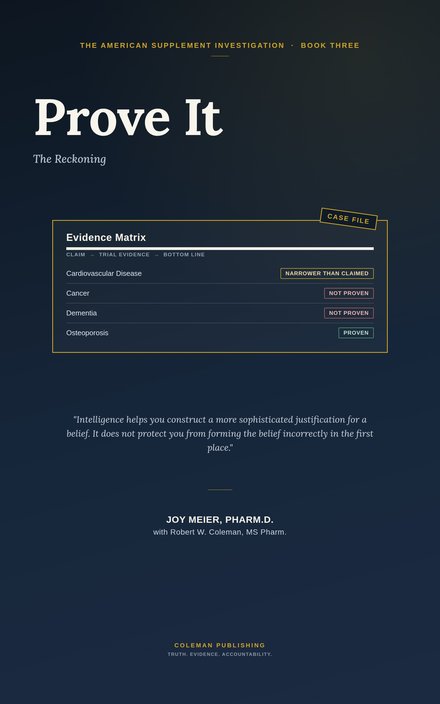
Chapter 1: Supplements and Chronic Disease
▶
The framework, stated once, used throughout
▶
Cardiovascular disease fish oil
▶
Cancer the beta-carotene lesson, applied again
▶
Diabetes chromium and cinnamon
▶
Dementia ginkgo biloba
▶
Osteoporosis calcium and vitamin D
▶
The pattern, named
▶
Chapter 2: Vitamins Necessary Does Not Mean More Is Better
▶
Three zones, not two
▶
Vitamin C hard to overdose, easy to overpromise
▶
Vitamin D the popularity surge, and what the trials actually found
▶
B12 and the B-complex treating a deficiency, not a baseline
▶
The core reframe
▶
Chapter 3: Minerals Essential and Potentially Dangerous
▶
Calcium the exception’s own caveat
▶
Iron deficiency, overdose, and overload
▶
Magnesium a popular claim, a modest evidence base
▶
Zinc and selenium real deficiency correction, real toxicity syndromes
▶
Potassium the mineral regulation actually restricts
▶
The Essential Nutrient Paradox
▶
Chapter 4: Herbal Remedies
▶
Standardization the word that’s supposed to fix this
▶
Traditional use as a hypothesis, not a conclusion
▶
St John’s Wort a genuine partial success, with a serious caveat already on record
▶
Echinacea popular, and mostly unconvincing
▶
Saw palmetto two large trials, one clear answer
▶
Product variability and contamination
▶
Chapter 5: The Supplement for Everything
▶
What all ten have in common
▶
The American Supplement Promise Map
▶
Part VIII: The Information Problem
▶
Chapter 6: When Science Becomes Content
▶
The algorithm, widened
▶
The asymmetry of effort
▶
AI-generated health content a genuinely new wrinkle
▶
Chapter 7: The Misinformation Business
▶
A business model, not a byproduct
▶
The incentive structures, named plainly
▶
The consequence gap
▶
Evidence Spotlight — Following One Claim’s Money
▶
Chapter 8: Why Smart People Believe
▶
Intelligence and bias are mostly separate systems
▶
Six distinct mechanisms, not one
▶
Identity the mechanism that resists correction
▶
The Belief Cycle
▶
Part IX: The International Perspective
▶
Chapter 9: What Other Countries Do Differently
▶
Canada a license before a sale
▶
Australia sorting by risk, not treating everything alike
▶
The European Union and United Kingdom a positive list, not a presumption
▶
International Supplement Regulation
▶
An accident of politics, not a reflection of unique values
▶
Part X: The Investigation
▶
Chapter 10: Case Files
▶
Case One Ephedra and the Death of Steve Bechler
▶
Case Two Red Yeast Rice and the Pharmanex Litigation
▶
Case Three The Tainted Product Pattern
▶
Case Four NMN and the Cost of Regulatory Ambiguity
▶
Chapter 11: Following the Evidence
▶
A systematic review of the investigation
▶
What this investigation is not
▶
What comes next
▶
Appendix: What Should Change
▶
Toward a Recommended Framework After Following the Evidence on What Has Actually Worked
▶
What the evidence actually shows
▶
The design principles this model is built on
▶
The Recommended Model A Tiered Evidence Framework
▶
What changes for you
▶
Why not go straight to full drug-style premarket approval
▶
What this model does not solve
▶
About the Authors: Robert Coleman, MS Pharm.
▶
Robert Coleman, MS Pharm.